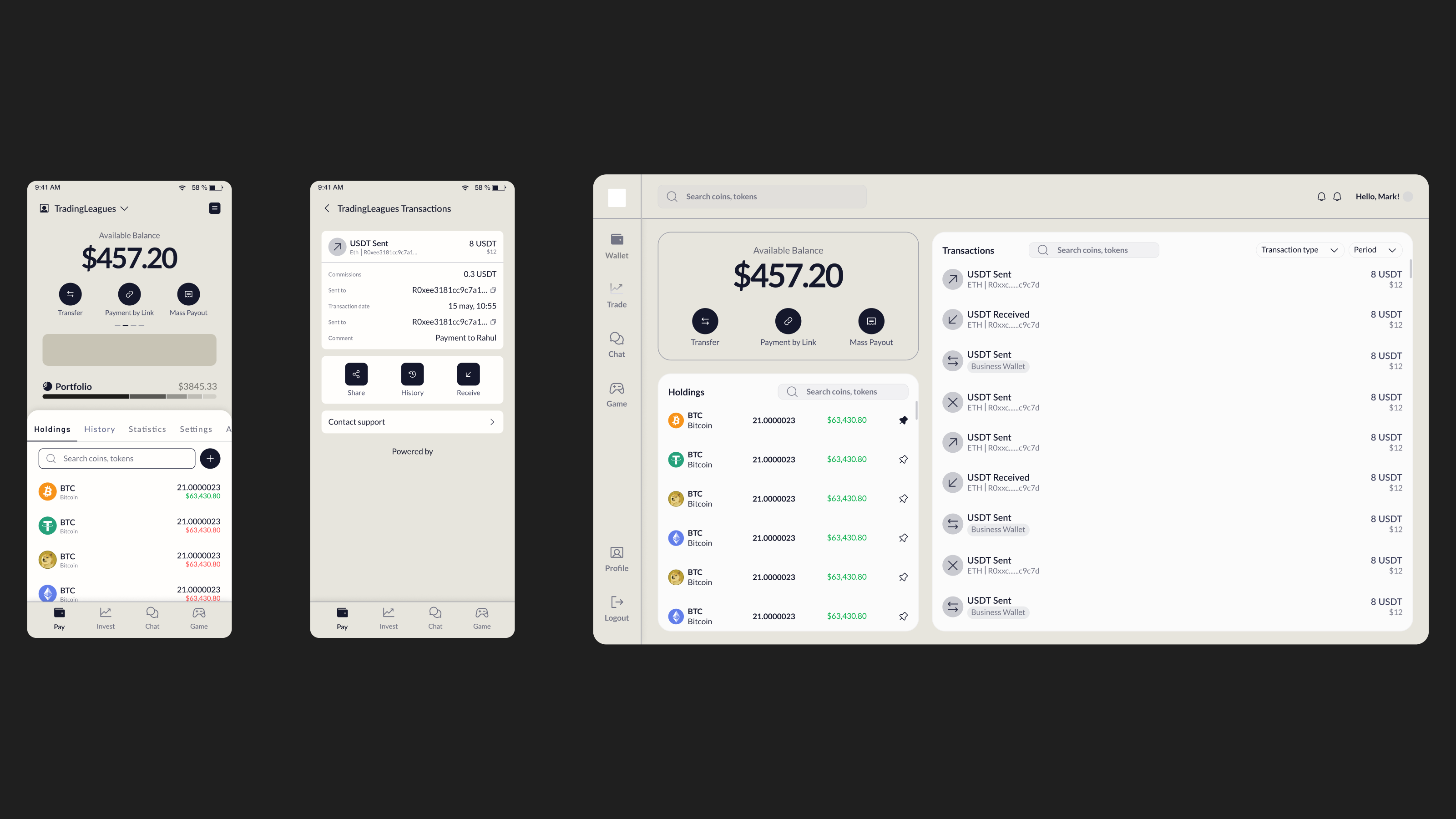
Before Tylt existed, I was designing TradingLeagues, a crypto-based trading product. We kept seeing the same failure: transactions dropping off not because of pricing or merchant tooling, but because customers couldn't add crypto to their wallets if they didn't already have one.
On the surface it looked like a customer onboarding problem. It wasn't. Every failed transaction was a merchant's revenue loss. Every abandoned payment was a support ticket, a reconciliation task, a customer they couldn't convert again.
The insight that shaped Tylt: merchant success was tightly coupled to customer crypto readiness, and that was a dependency merchants had no way to control. Tylt was built to break that dependency.
Merchant revenue depends on customer crypto readiness (a dependency merchants had no way to control).
Merchant infrastructure absorbs customer complexity entirely. Crypto is invisible to the end user.
When Tylt was greenlit in August 2024, it had a product direction and a development team. It didn't have flows, navigation, IA, or a design language. As the founding designer, the job was to build all of it, fast enough to ship CPG by December.
The first decision I fought for: structure before aesthetics. The founders wanted to see what the product would look like. I pushed to lock flows, navigation, and layouts first (across the entire app) before touching visual design.
This wasn't built from a blank page either. Before locking IA, I looked at how others had already solved pieces of the same problem.
With the product scope mapped, I built the information architecture around a single core loop: onboard → transact → track → repeat.
Once IA was set, basic web & mobile layouts came next, worked out directly on the TradingLeagues scaffold before any visual design began.
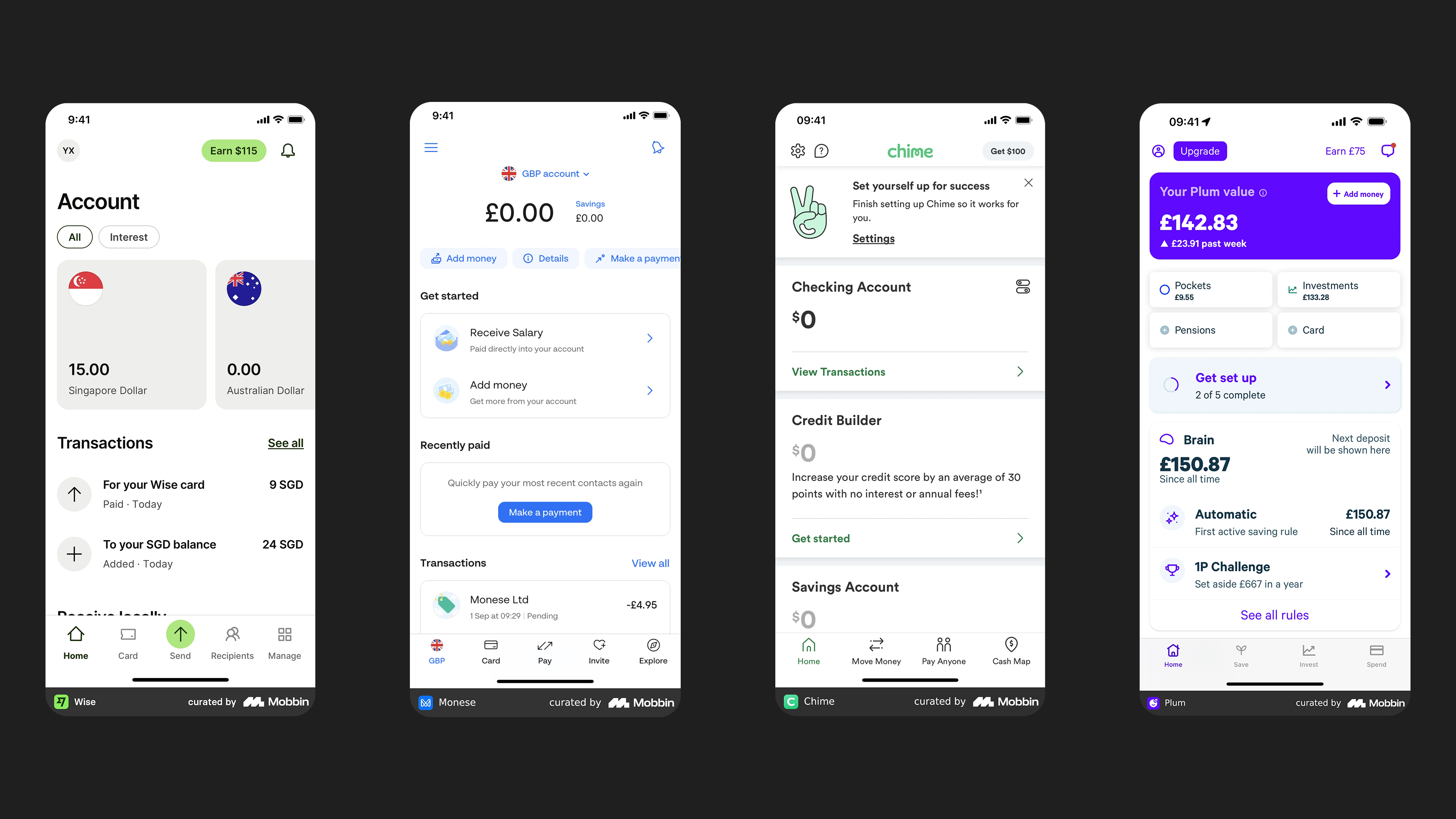
Once the flows were stable, I looked at four fintech apps (Plum, Chime, Monese, Wise) for how they handled clarity at scale. One pattern held across all four: a neutral base of black, white, and a few grays, with a single primary color reserved almost entirely for actions. Separation came from shadows, strokes, or gray fills more often than color: card shadows in Chime and Plum, strokes between sections in Monese, gray fills to highlight cards in Wise. Secondary color stayed tightly scoped, limited to a lighter primary tint for inputs (Monese) or accents mapped to specific use cases (Plum). Type ran bigger and more spaced than expected, with weight carrying real hierarchy instead of color.
From that research, a basic design system followed. It was built live in Figma, not a static reference doc.
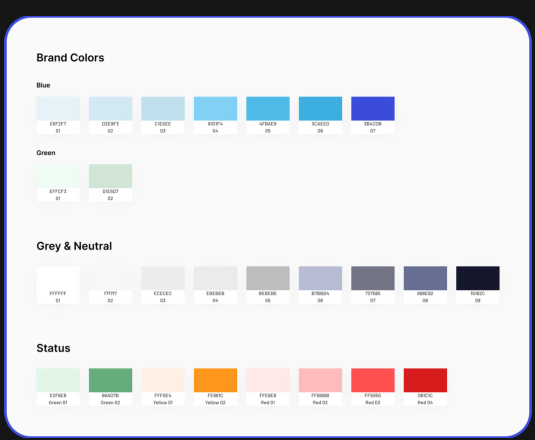
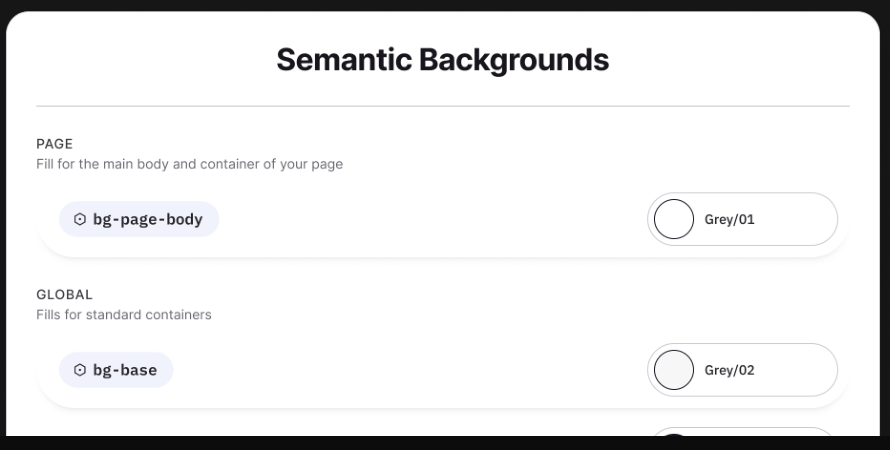
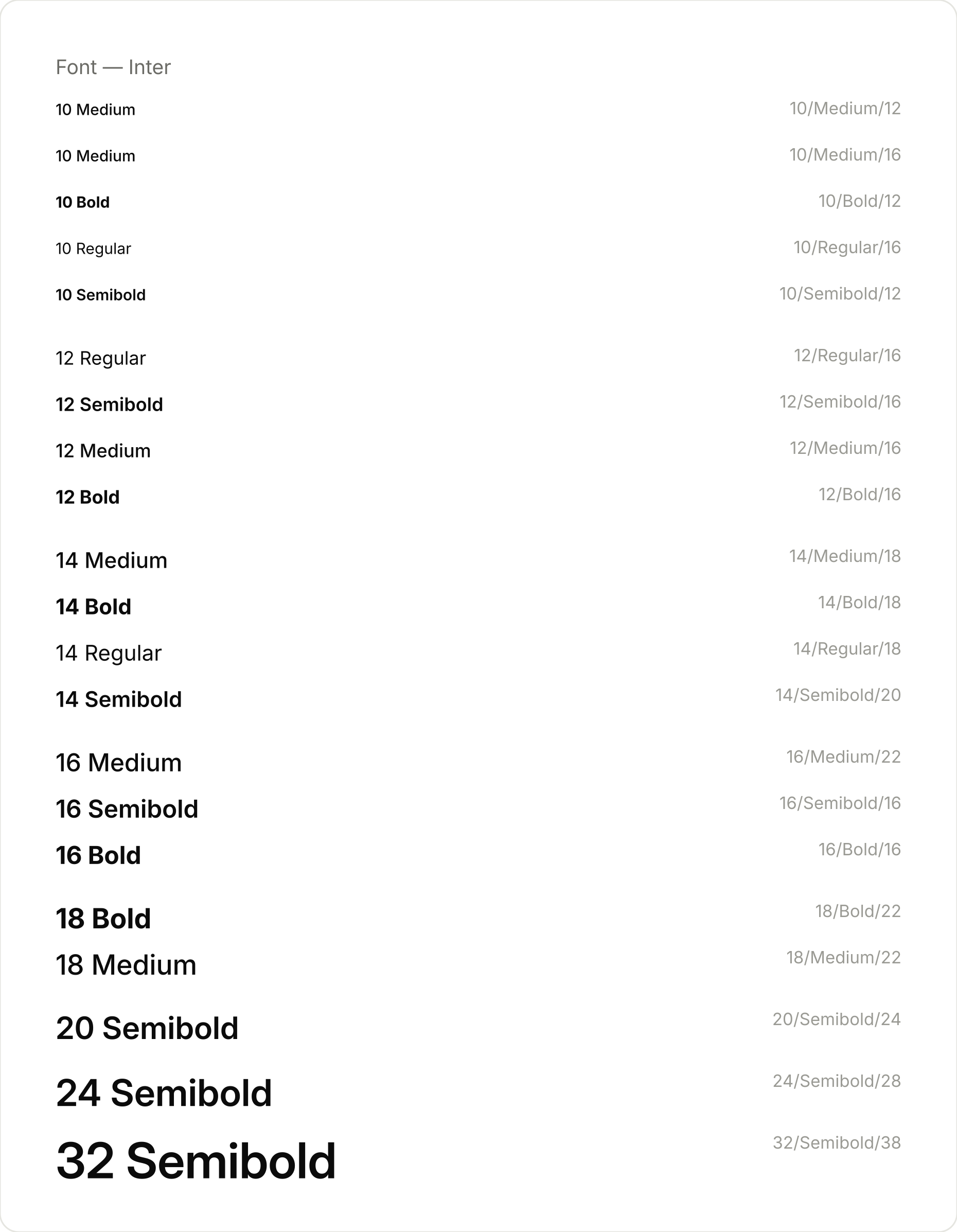
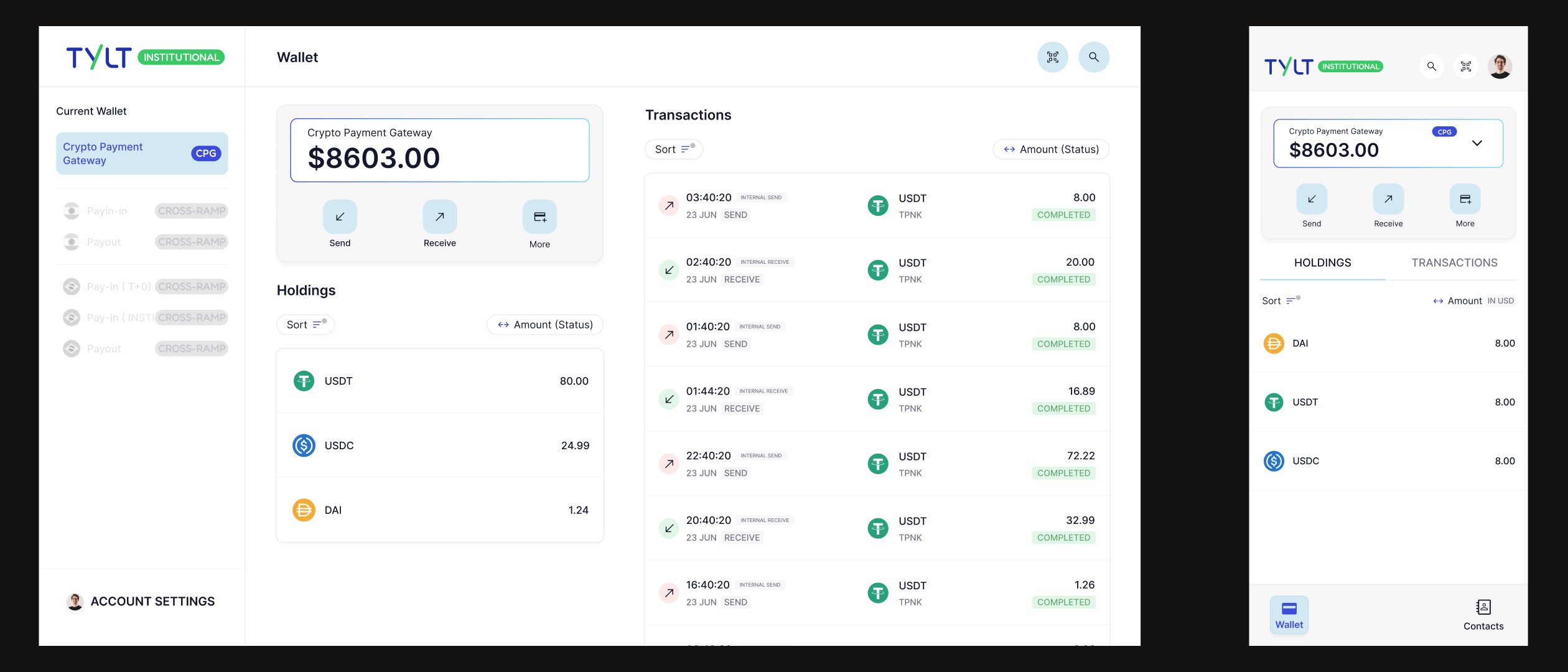
From there, hi-fi screens followed, the platform designed responsive from the start, desktop and mobile in parallel. Merchants needed desktop for operational workflows; retail users were primarily mobile.
V1 launched with a single flow: sign up with an email ID, land on the same home page. As the product matured, different user types had fundamentally different needs from sign-up. Rebuilt so Personal, Institutional, and Affiliate accounts each start from the right place. Cashier isn't a signup choice. It's access granted on top of a personal account.
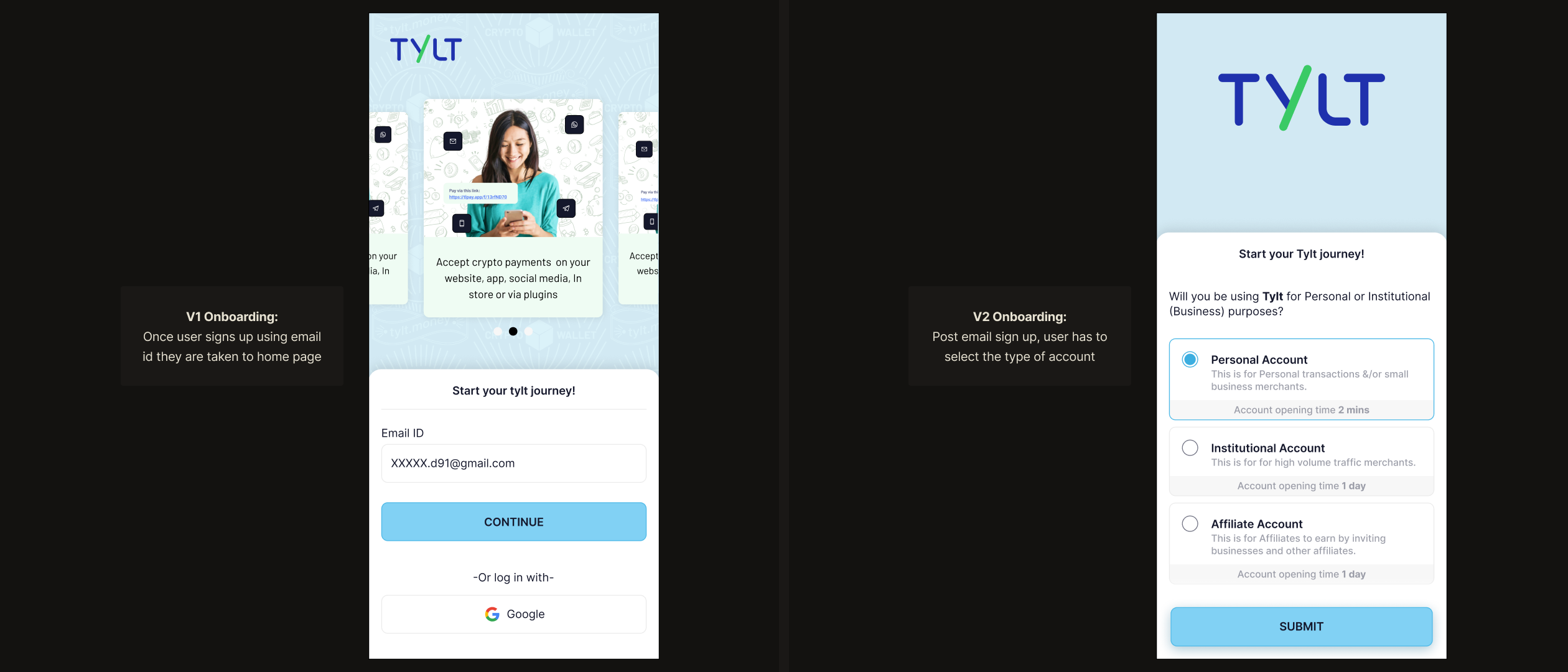
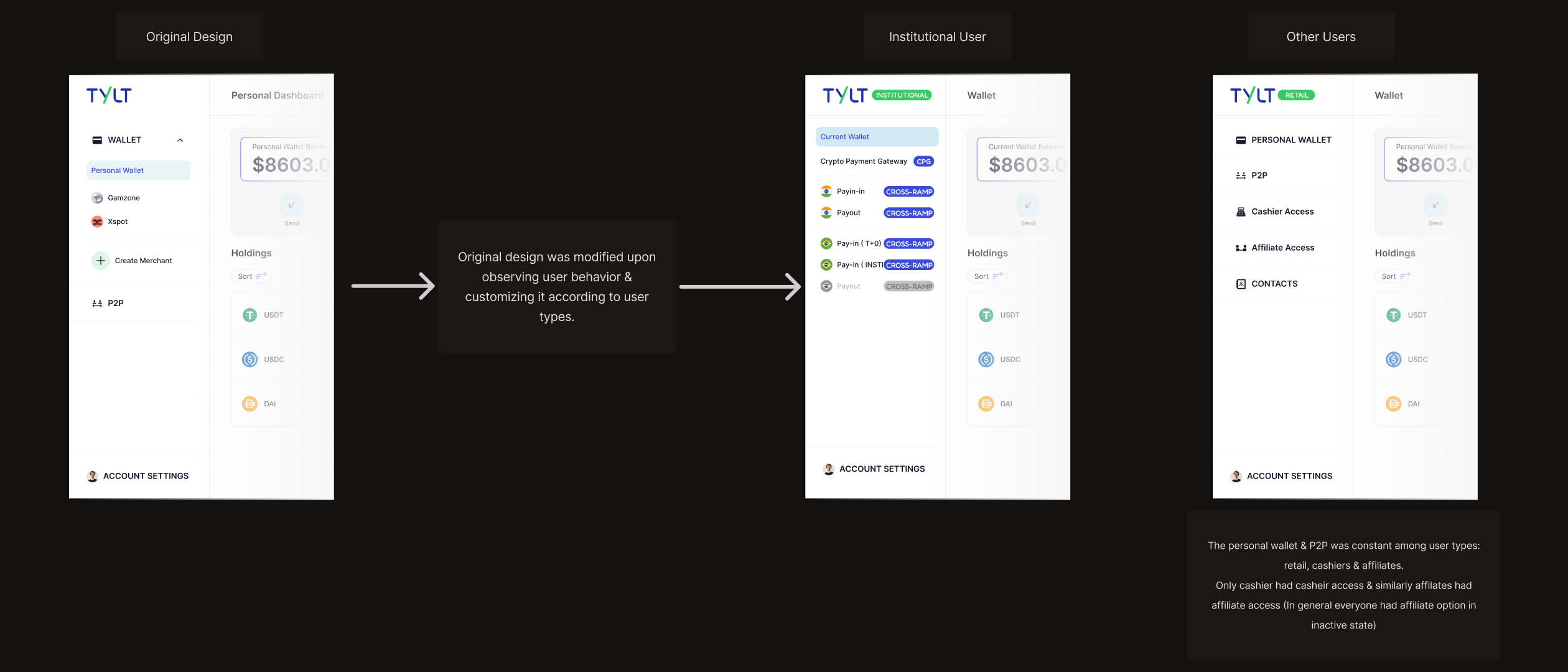
Any user could once open a business account to unlock CPG and CrossRamp, needed or not. Usage showed most only used send-receive and P2P, so accounts split by need: Retail/Personal (basics), Institutional/Business (full suite), Cashier (+ cashier access), Affiliate (+ affiliate access).
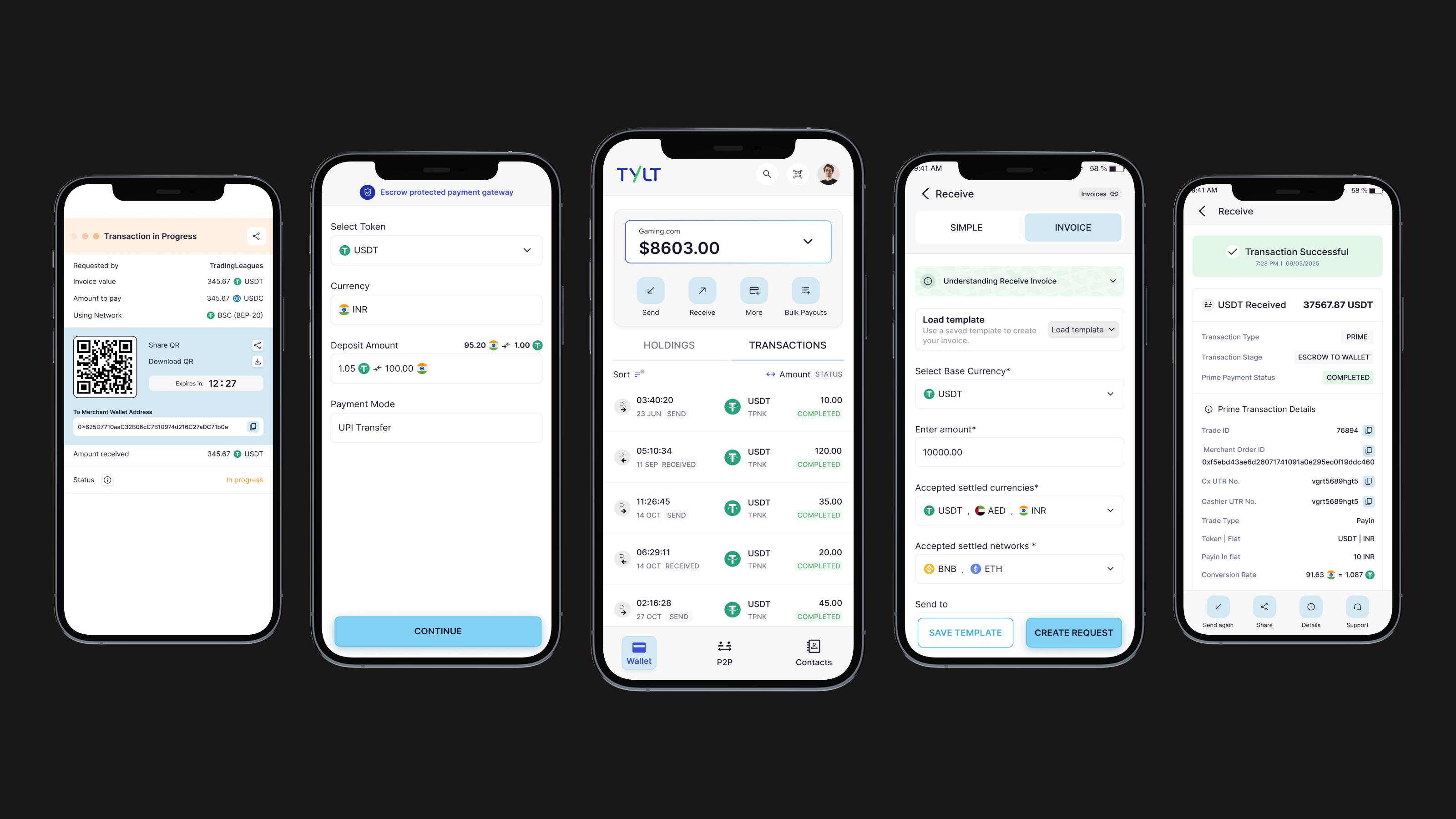
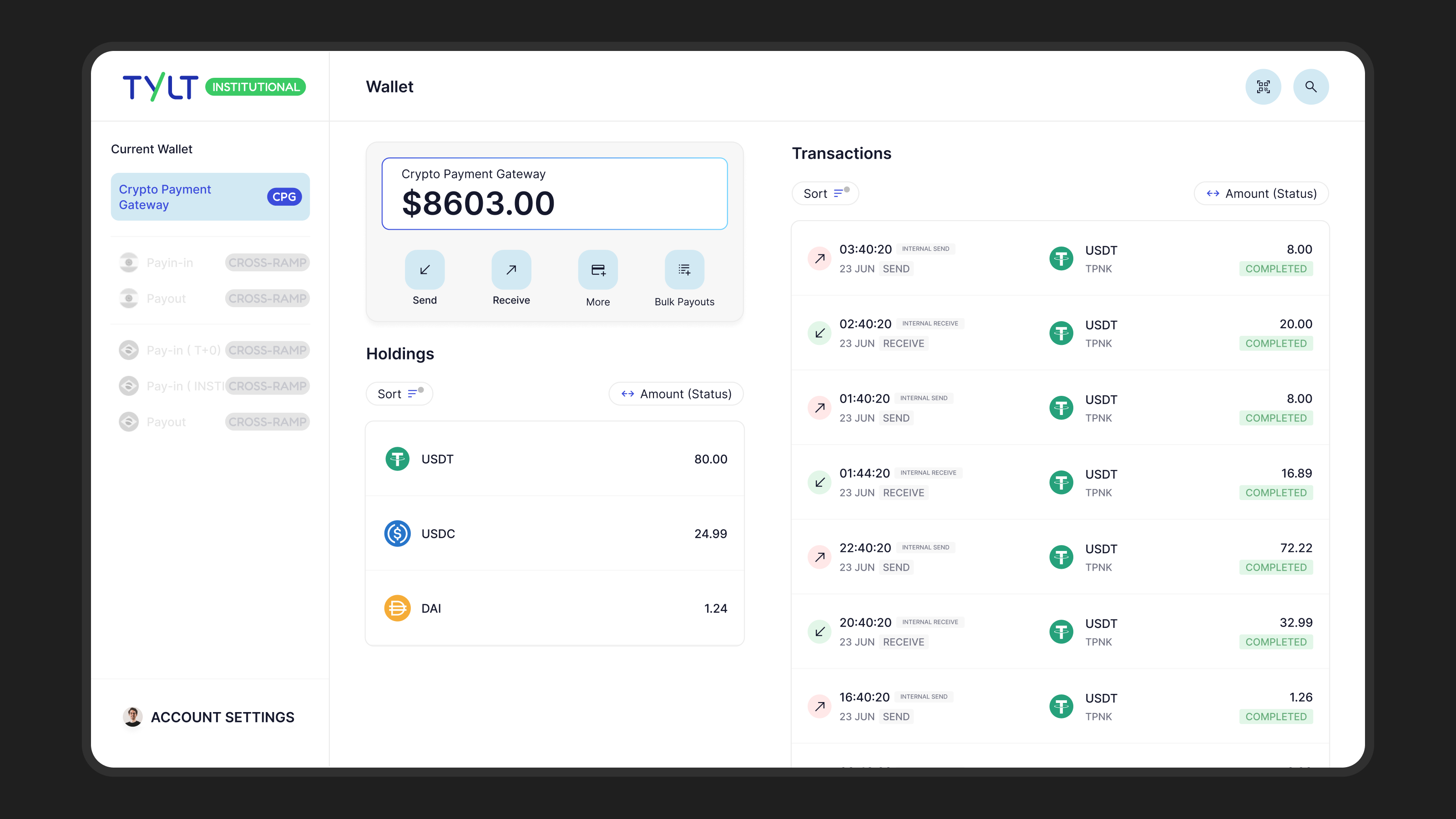
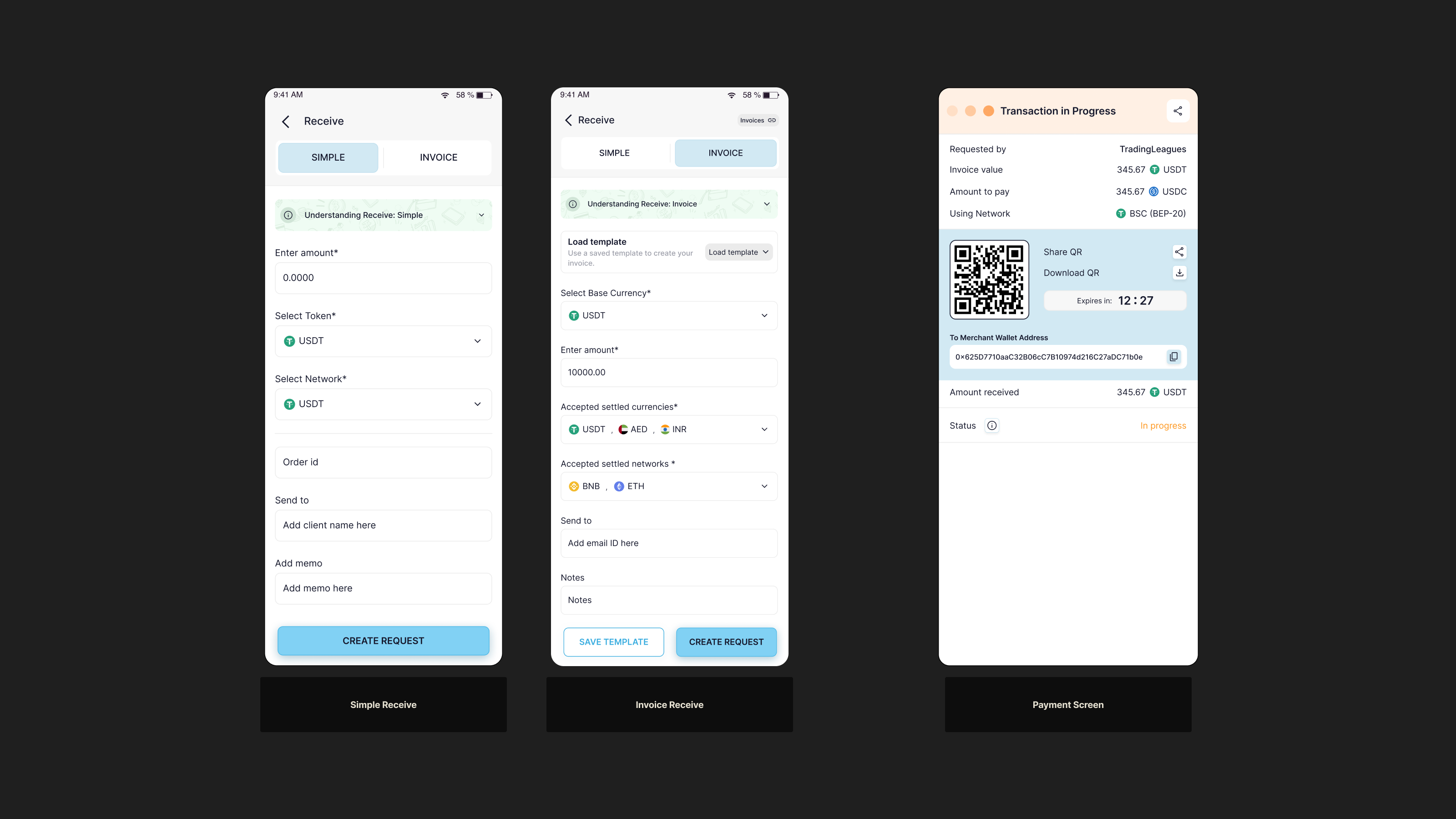
CPG is Tylt's core product for merchants: accept and send stablecoin payments globally, with instant settlement across networks. It's the send, receive, and transaction-history surface built for institutional accounts. It was also the first product to ship, live in December 2024, four months after design began.
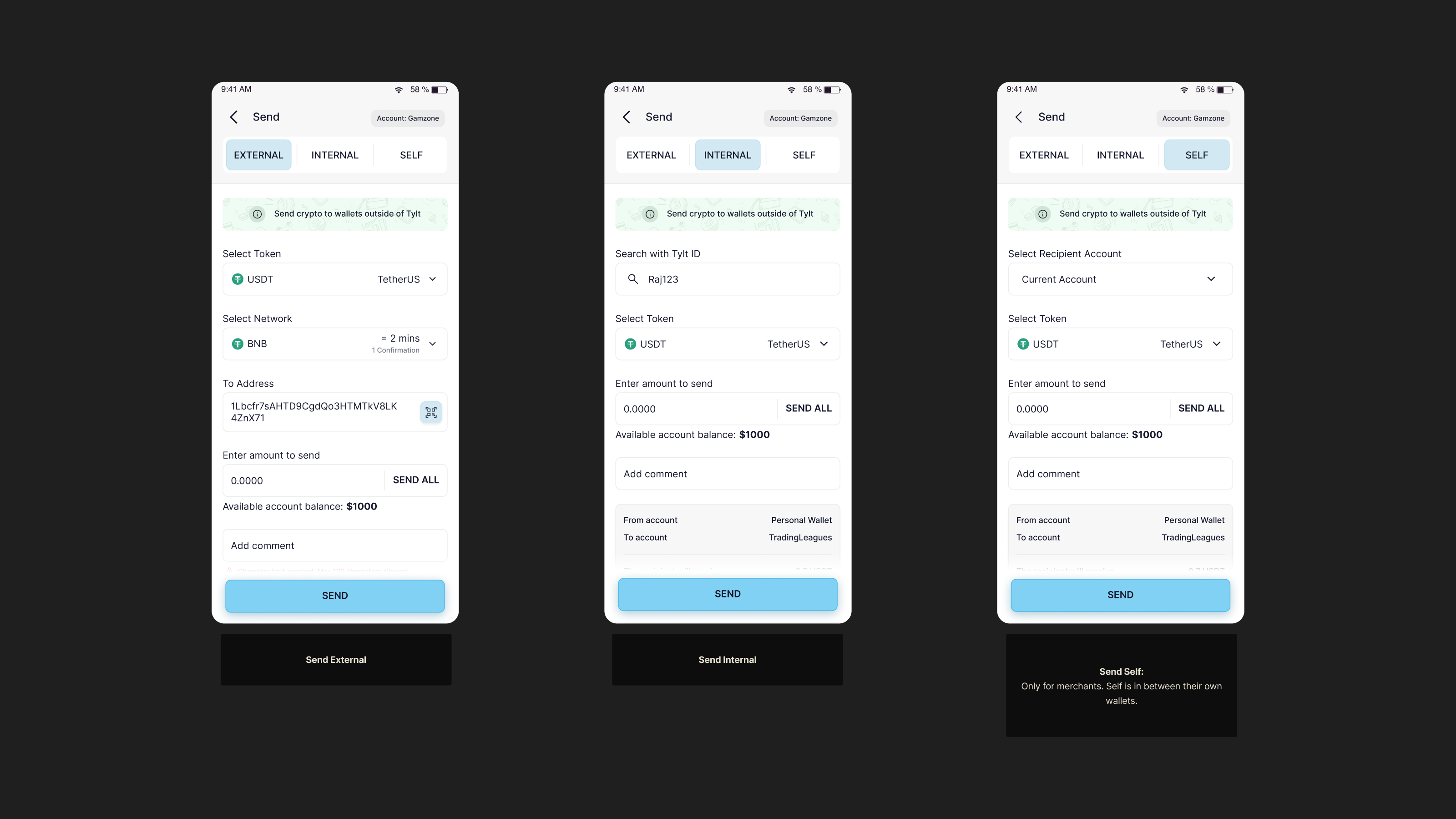
Send splits by destination: external wallet, internal Tylt account, or self, between a merchant's own wallets.
Two receive modes for merchants: Simple for a fixed token and network, Invoice for letting the customer choose.
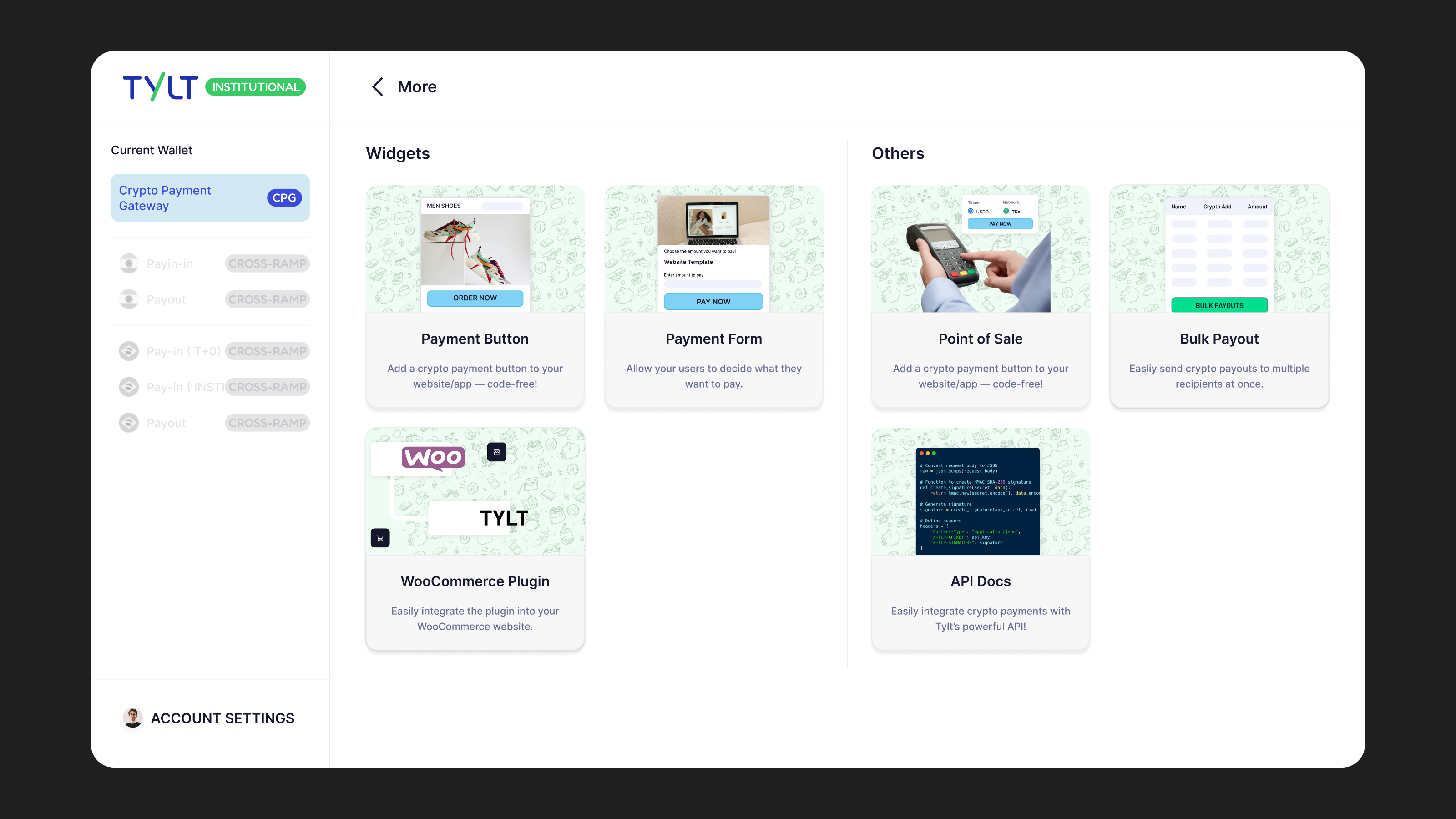
Widgets are the no-code way to plug CPG into a merchant's existing storefront, through payment buttons, forms, POS, and bulk payouts, no API required. Where CPG's core is built for developers, Widgets extend the same payment rails to non-technical merchants who just need to drop in a link, button, or QR code.
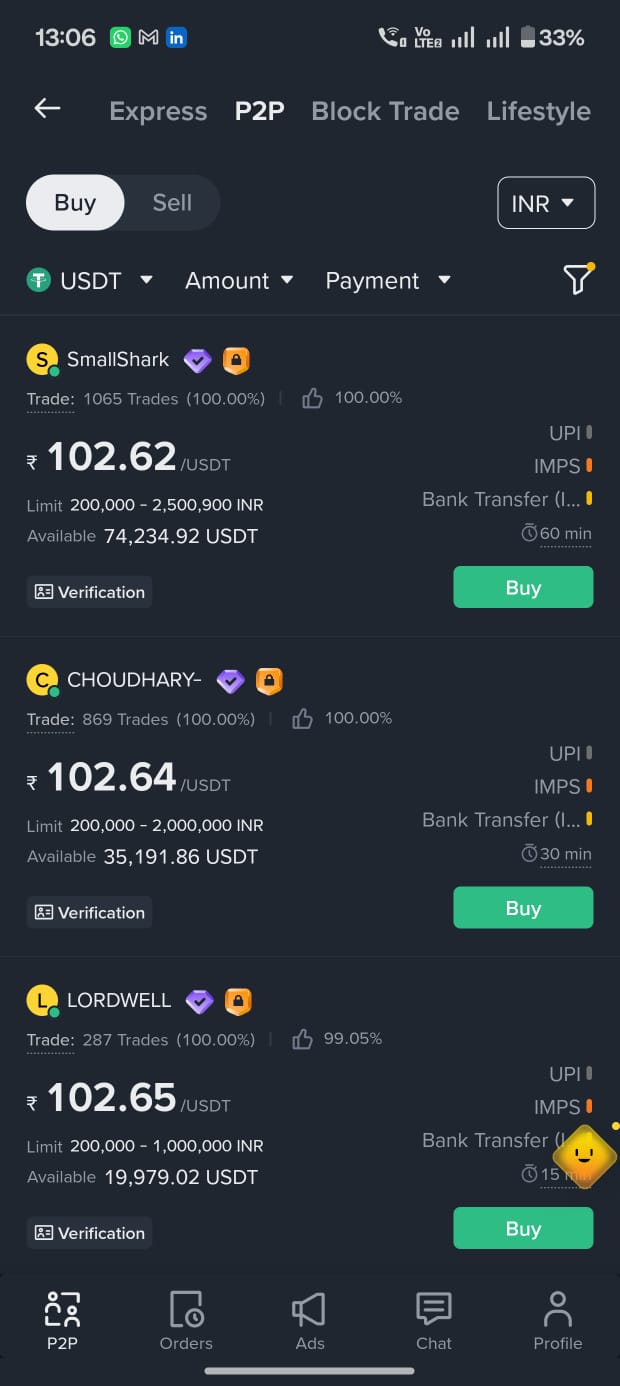
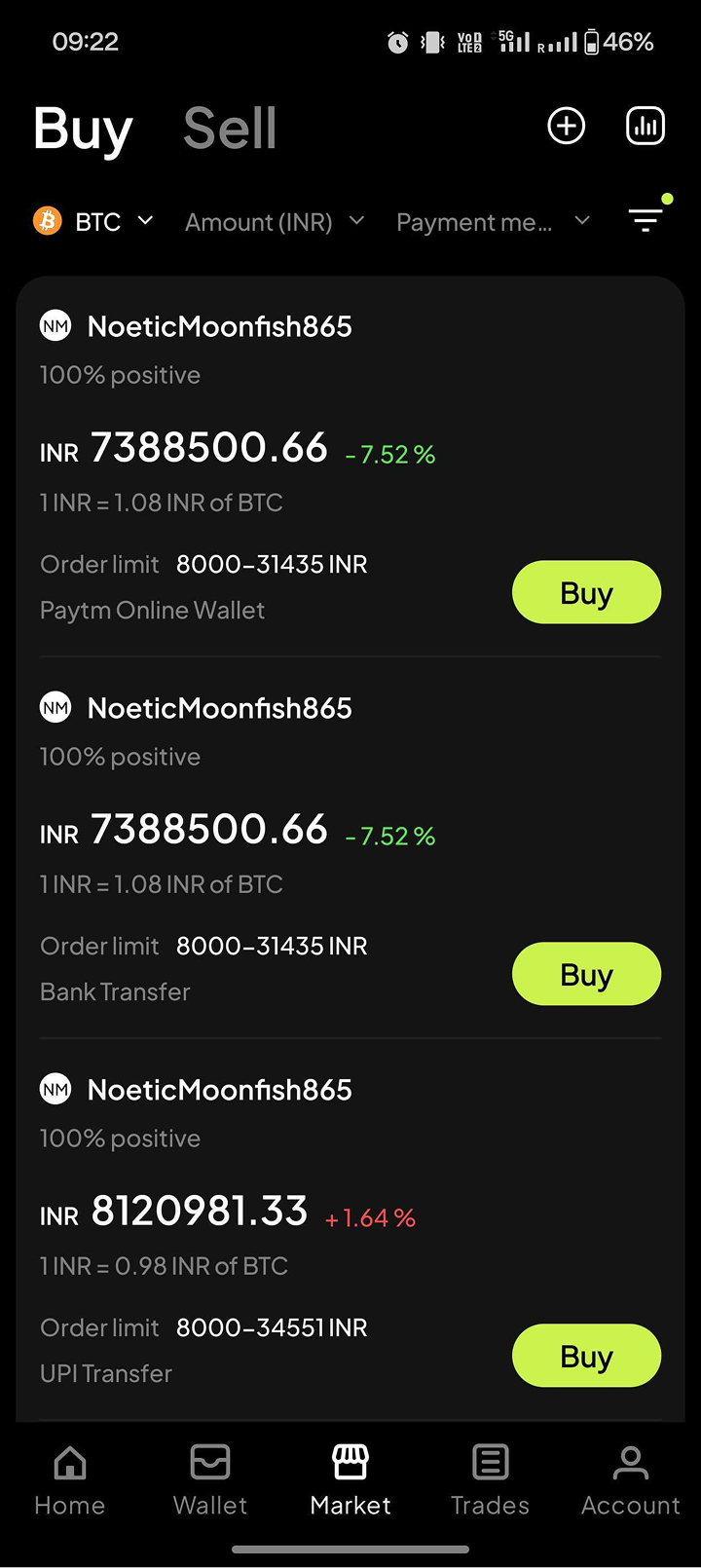
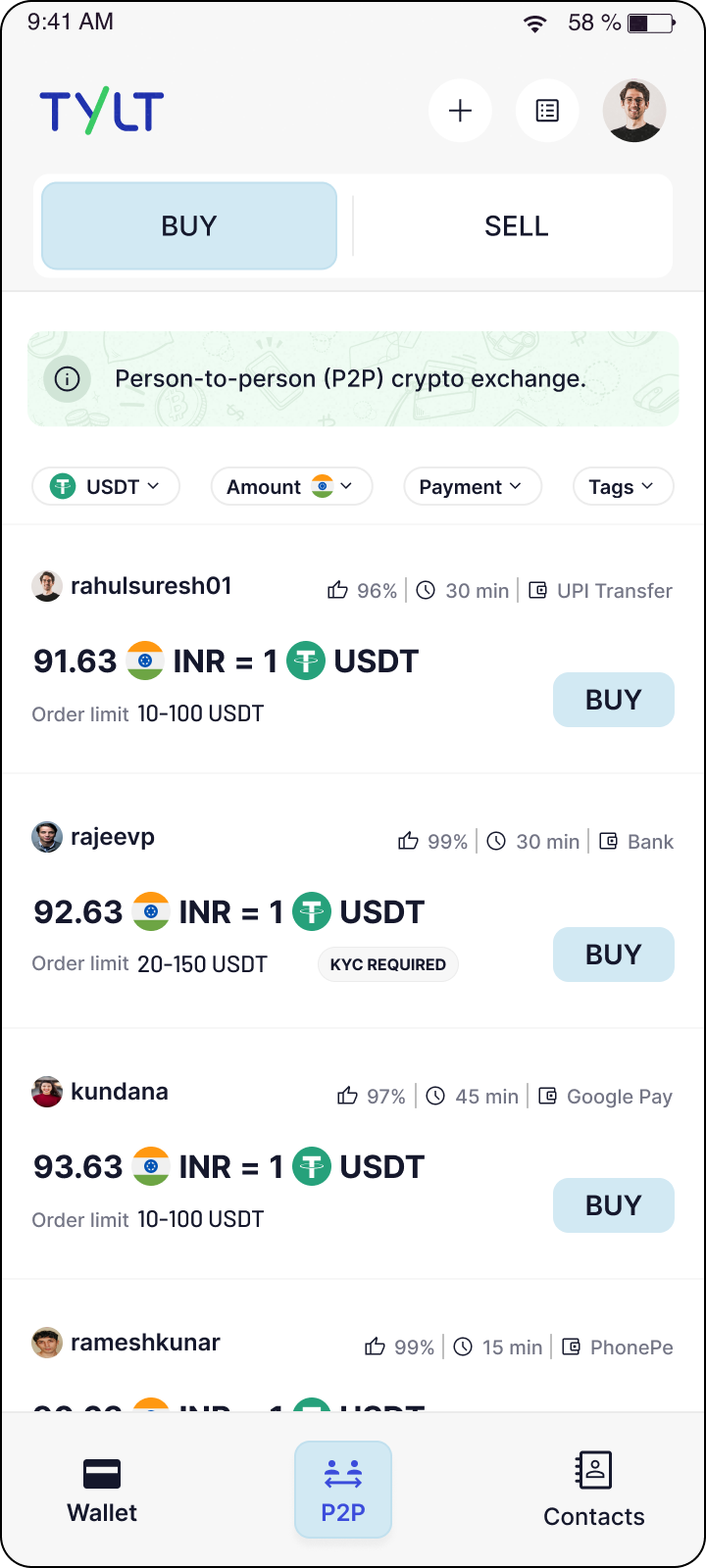
After CPG and Widgets, P2P was next. I used two leading platforms personally (Binance P2P and Paxful) as a real user, not just a researcher, before designing Tylt's own.
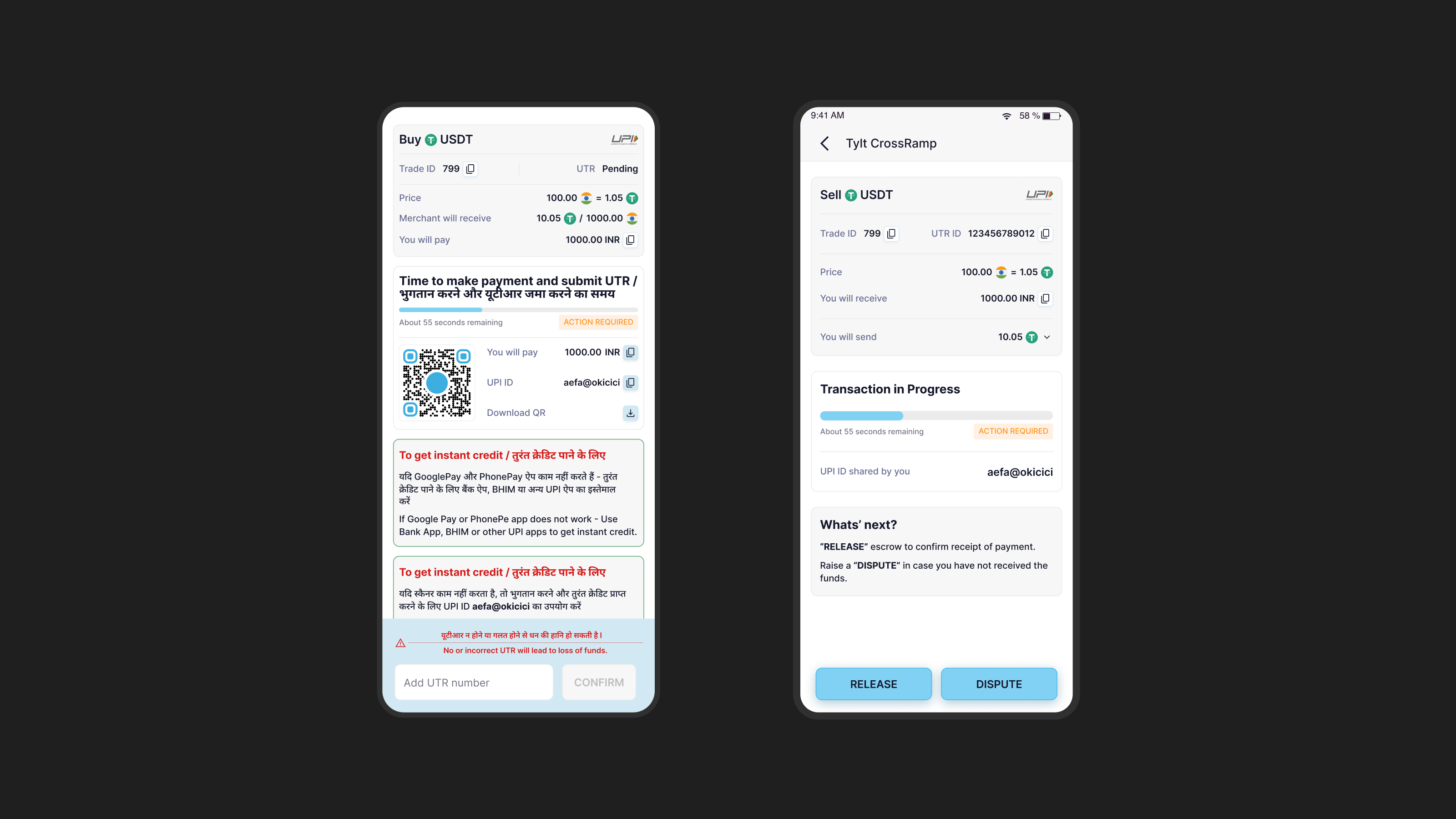
CrossRamp lets customers pay in local fiat (UPI in India, PIX in Brazil, Open Banking in Europe) while merchants settle in crypto, without leaving the merchant's app. Built on Tylt's own P2P infrastructure, reused rather than rebuilt, with escrow holding funds until payment confirms. Launched in India, then expanded to Brazil and Europe. Full story in the CrossRamp case study.
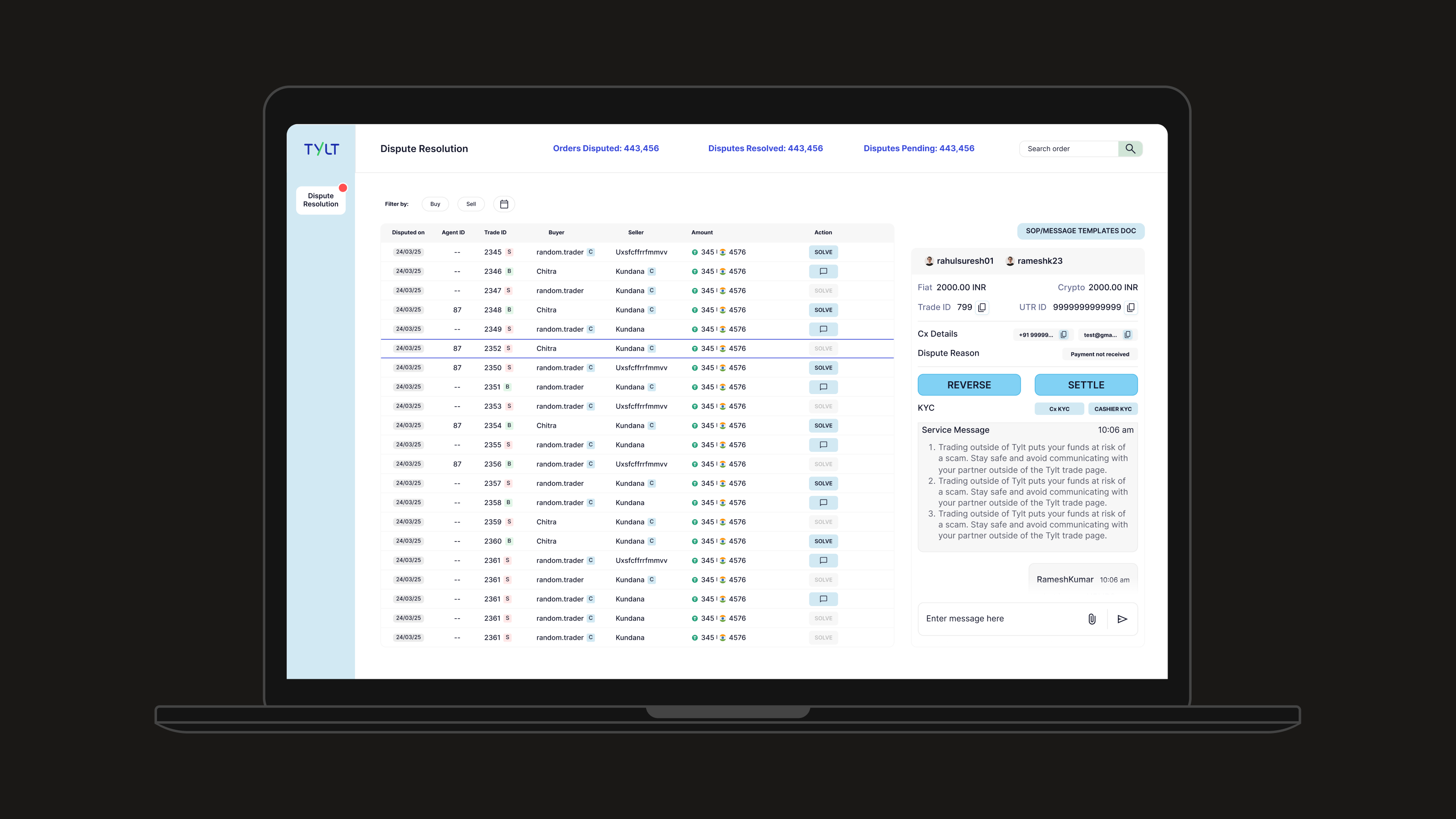
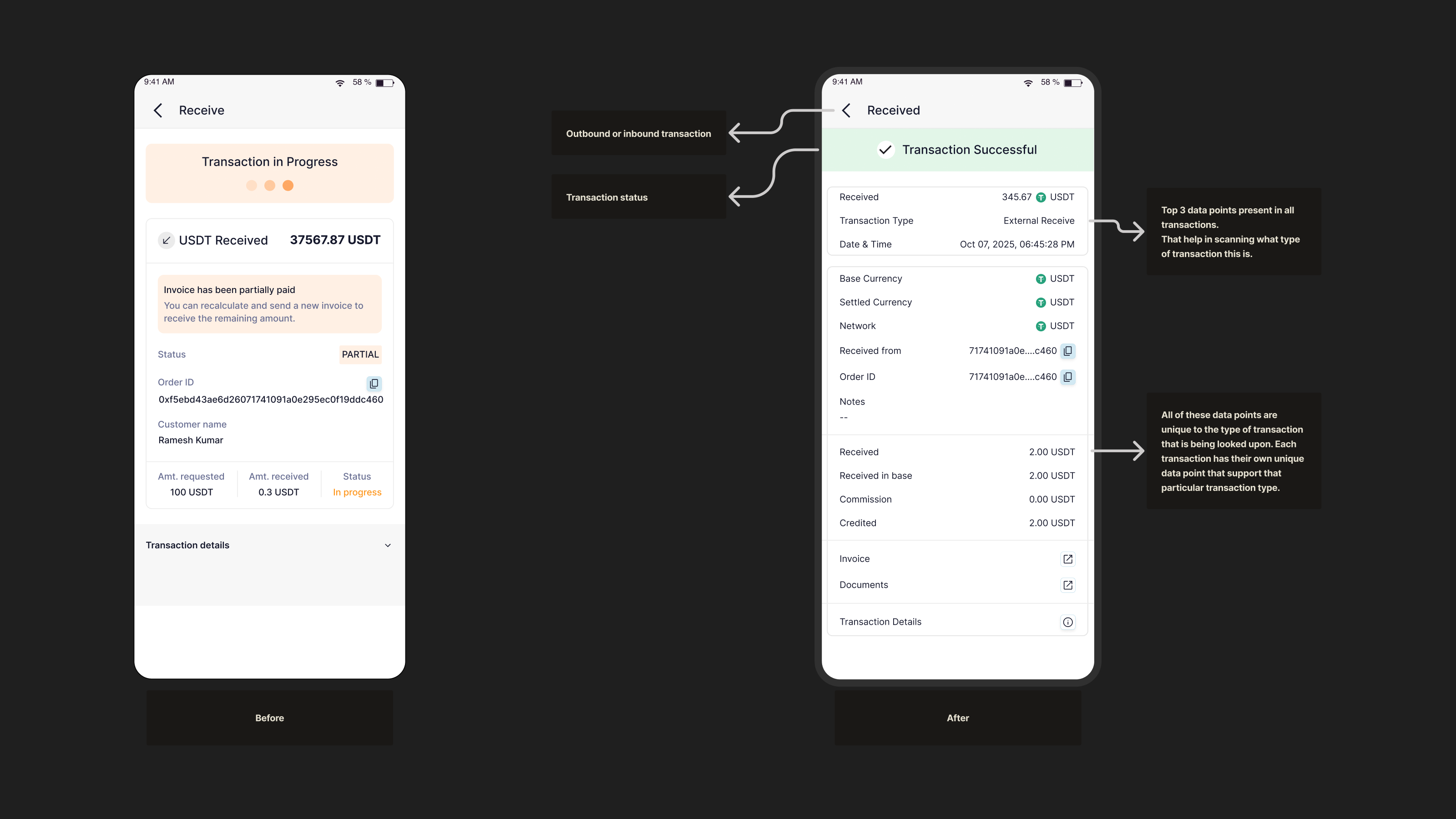
This is a payment gateway, so a transaction could come through CPG, P2P, or CrossRamp, and be either received or sent. A flat template made every transaction look the same, whichever path it came from. A clearer system was built so any transaction is identifiable just by scanning it: consistent header, then fields specific to that transaction type.
The hardest part of 0 to 1 isn't the design: it's that the brief keeps moving. Founders are still discovering what the product is while you're trying to design it. The instinct is to wait for clarity. The better approach, I learned, is to create it by working through IA, through flows, through structured decisions that force alignment before you're ready.
The pushback I'm most glad I made was insisting on structure before aesthetics. There was pressure to show what the product would look like early. I held the line: flows and layouts first, visual design after. It meant the visual work, when it came, had something real to respond to.
What I'd do differently: documentation. In a fast 0 to 1 environment, design decisions get made verbally and move fast. Better decision logs would have made handoff cleaner and made the product easier to evolve after launch.
Metrics and outcomes shown are directional. Specific figures reflect overall trends, not audited data.