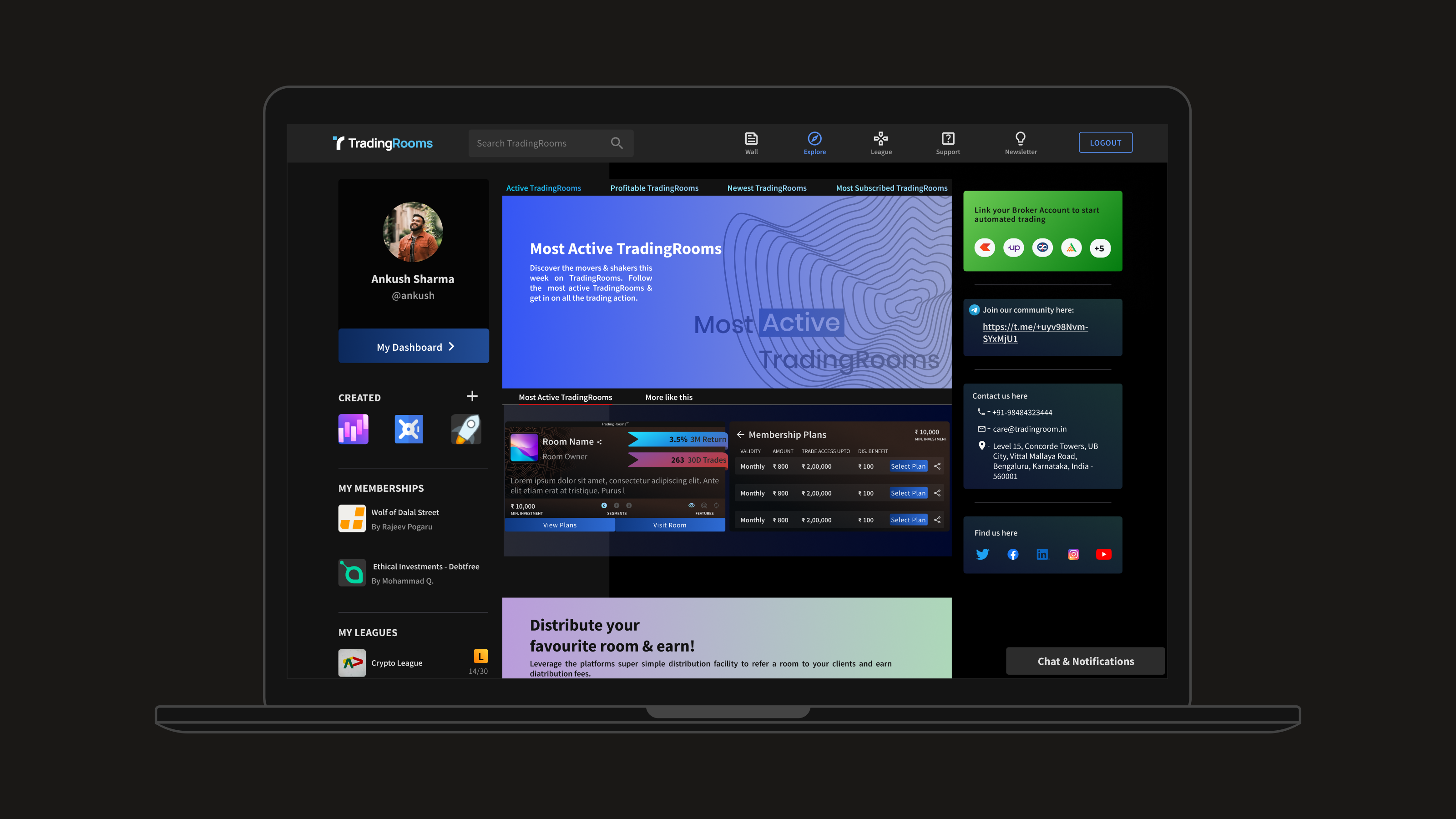
The team had a concept: a competitive, league-based trading experience. What they didn't have was clarity on what that actually meant. How would a league work? What were the rules? How would different skill levels be accommodated? How would users navigate between formats? What happened when a league ended?
None of these had answers. The brief wasn't to validate whether to build, since the decision had already been made. The brief was to define what to build, with enough precision that an external design team could execute without ambiguity.
“Success at this stage meant clarity, not polish. The MVP was a direction artifact, not a deliverable.”
That's a different kind of problem than most design briefs. No existing product to reference, no comparable feature to extend. The work is pure definition: take a high-level concept and turn it into a system with real rules, real states, and real decisions documented.
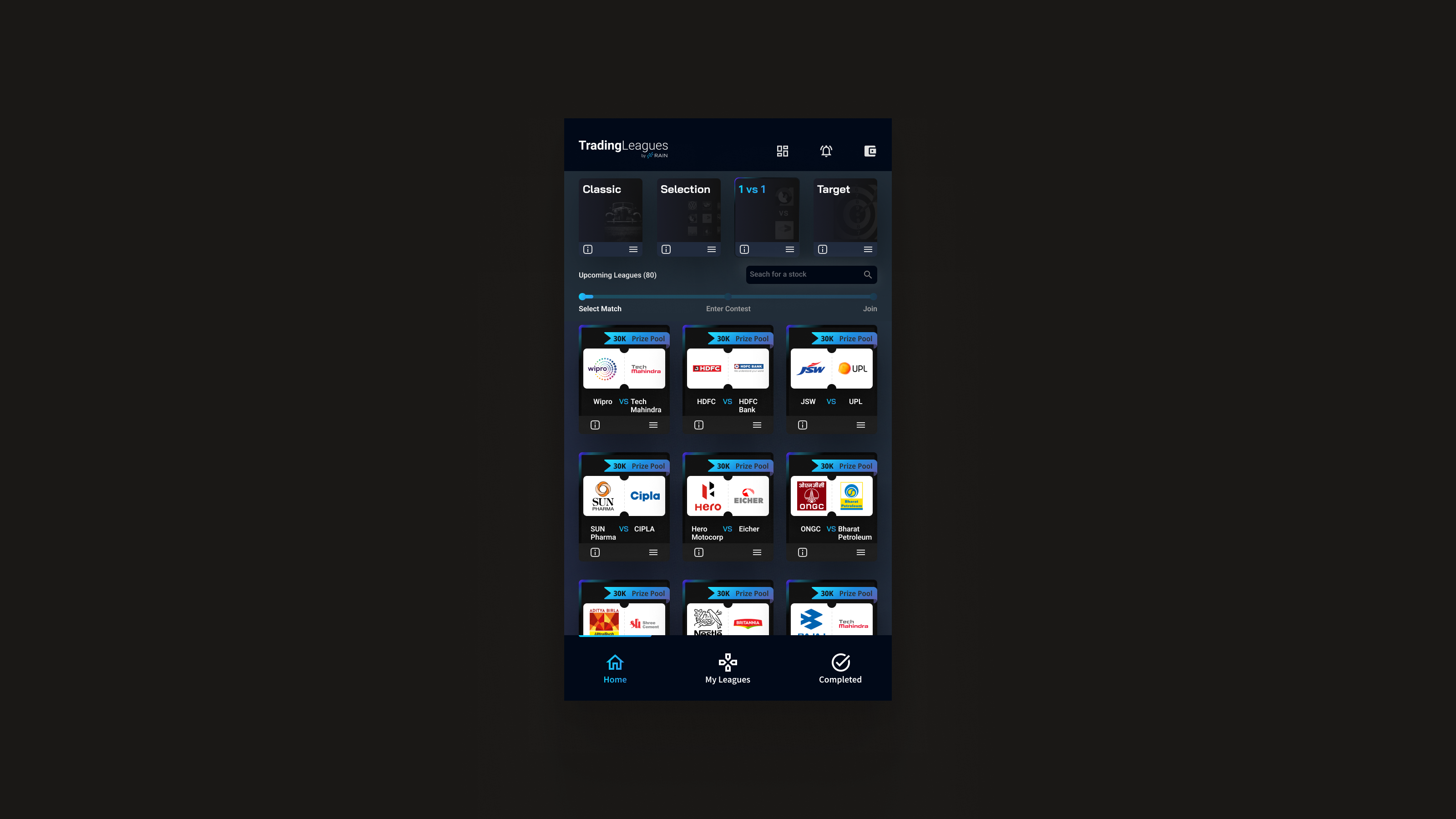
Before opening Figma, I mapped what each league would actually entail: rules, duration, user actions, outcomes. Only once the mechanics were clearer did I map the information architecture: how users would enter leagues, switch formats, track progress, and access supporting features.
This IA-first approach prevented premature UI decisions and ensured the product worked coherently as a system. Navigation prioritised active participation, with league discovery and tracking at the core and utilities like wallet and notifications kept secondary.
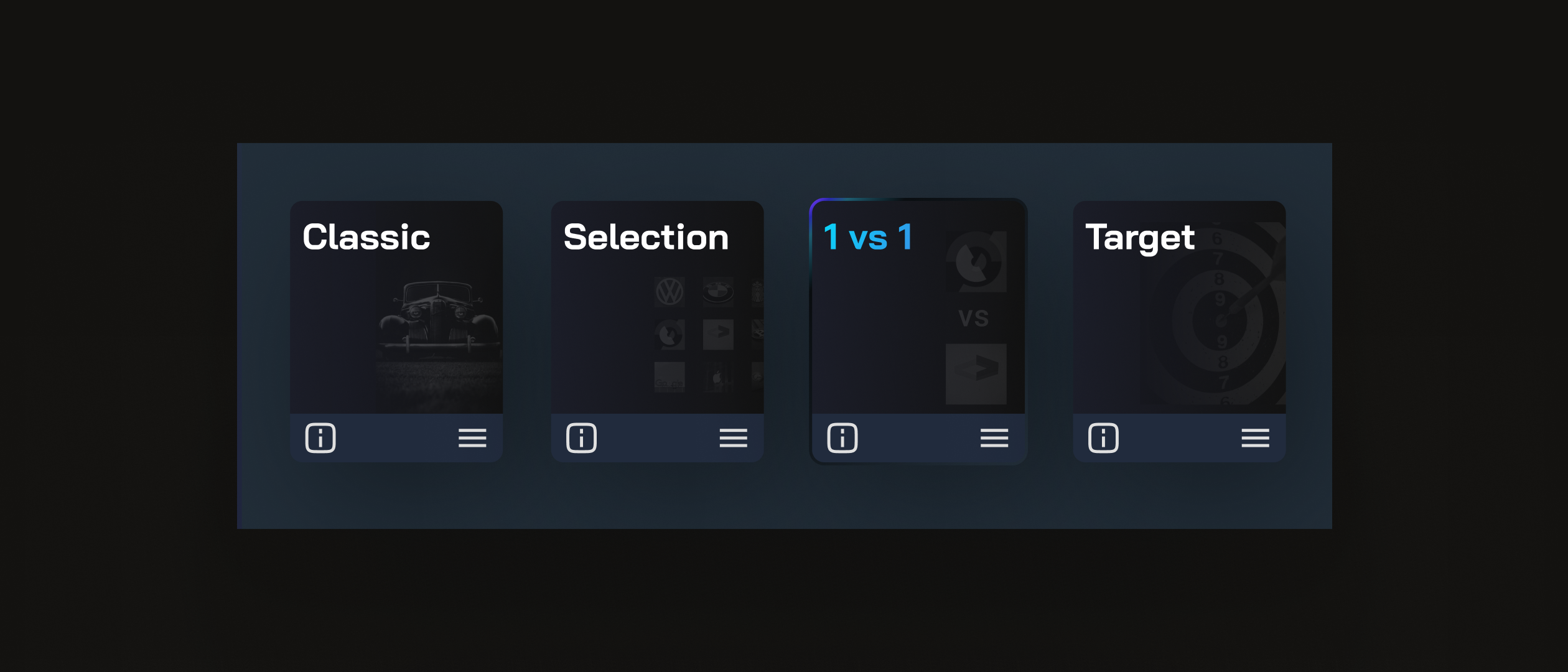
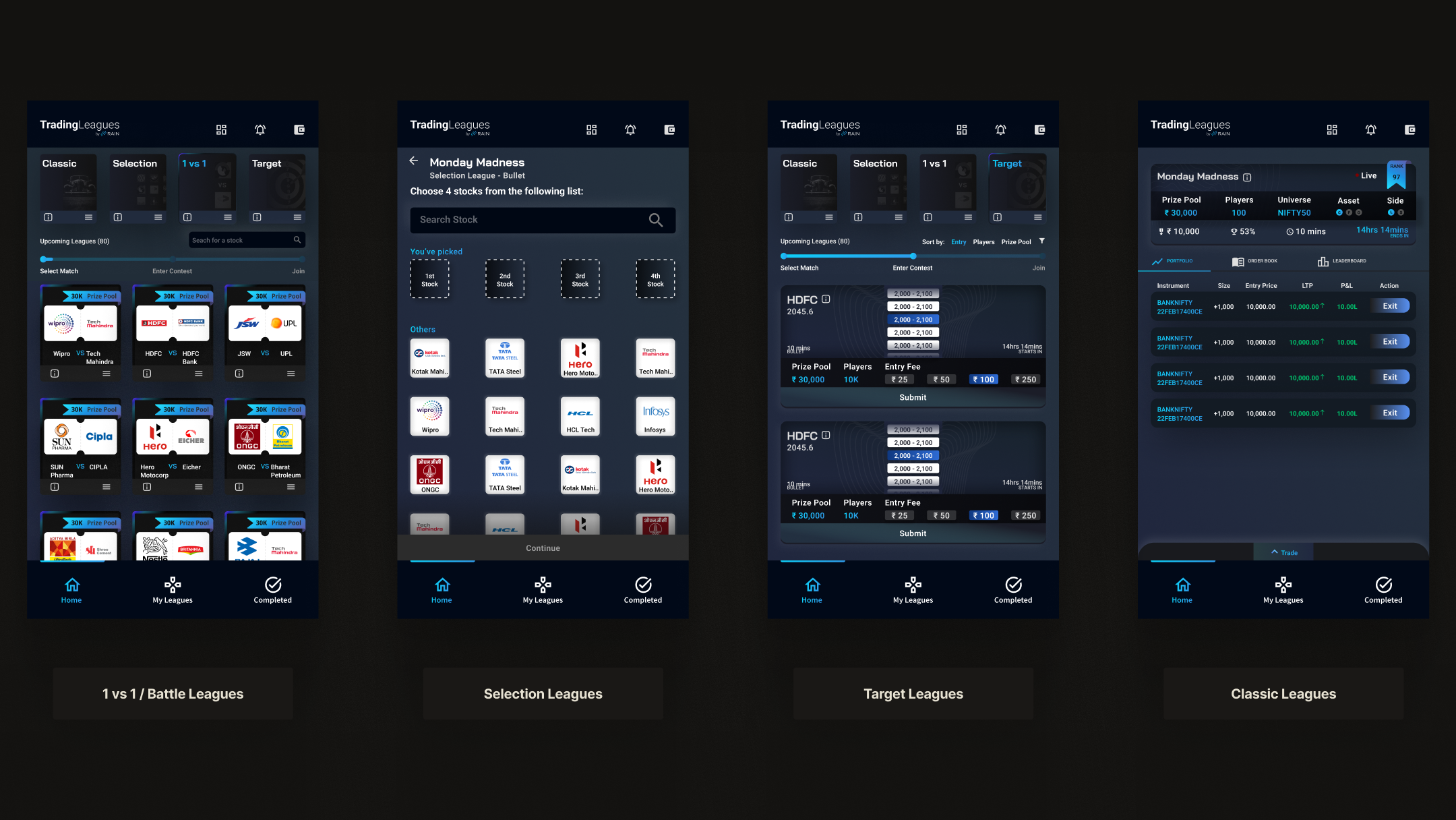
Four league formats, each targeting a distinct user motivation and skill level:
Design principle: Each format varied in rules, skill requirement, time commitment, and cognitive load. The goal wasn't variety for its own sake; it was making sure every user type had a format they could win at.
The navigation solution: league type as a secondary layer, with core participation states (Upcoming, Live, Completed) consistent across all formats. Users learned the system once, not four times.
Designing for handoff is different from designing for users. When you're designing for users, an ambiguous decision can be resolved in QA or user testing. When you're designing for another design team, ambiguity in the Figma becomes ambiguity in the product, and by the time it surfaces, it's expensive to fix.
Every decision in the MVP was made explicit. Not just what the screen looked like, but why: what the user needed at this point, what the system needed to communicate, what the constraints were, what had been considered and rejected.
The handoff included:
- Full IA with navigation logic documented
- All four league formats with rules and states defined
- System states for every league lifecycle moment: pre-join, active, completed, result
- Wallet and notification flows included
The external team took the MVP Figma and used it as the direct foundation for V1. Core decisions (league formats, navigation structure, the three-state league lifecycle) carried through unchanged.
I stayed involved through V1, coordinating with the internal mobile development team and tracking how MVP decisions translated into the shipped product. Two things evolved in ways worth noting:
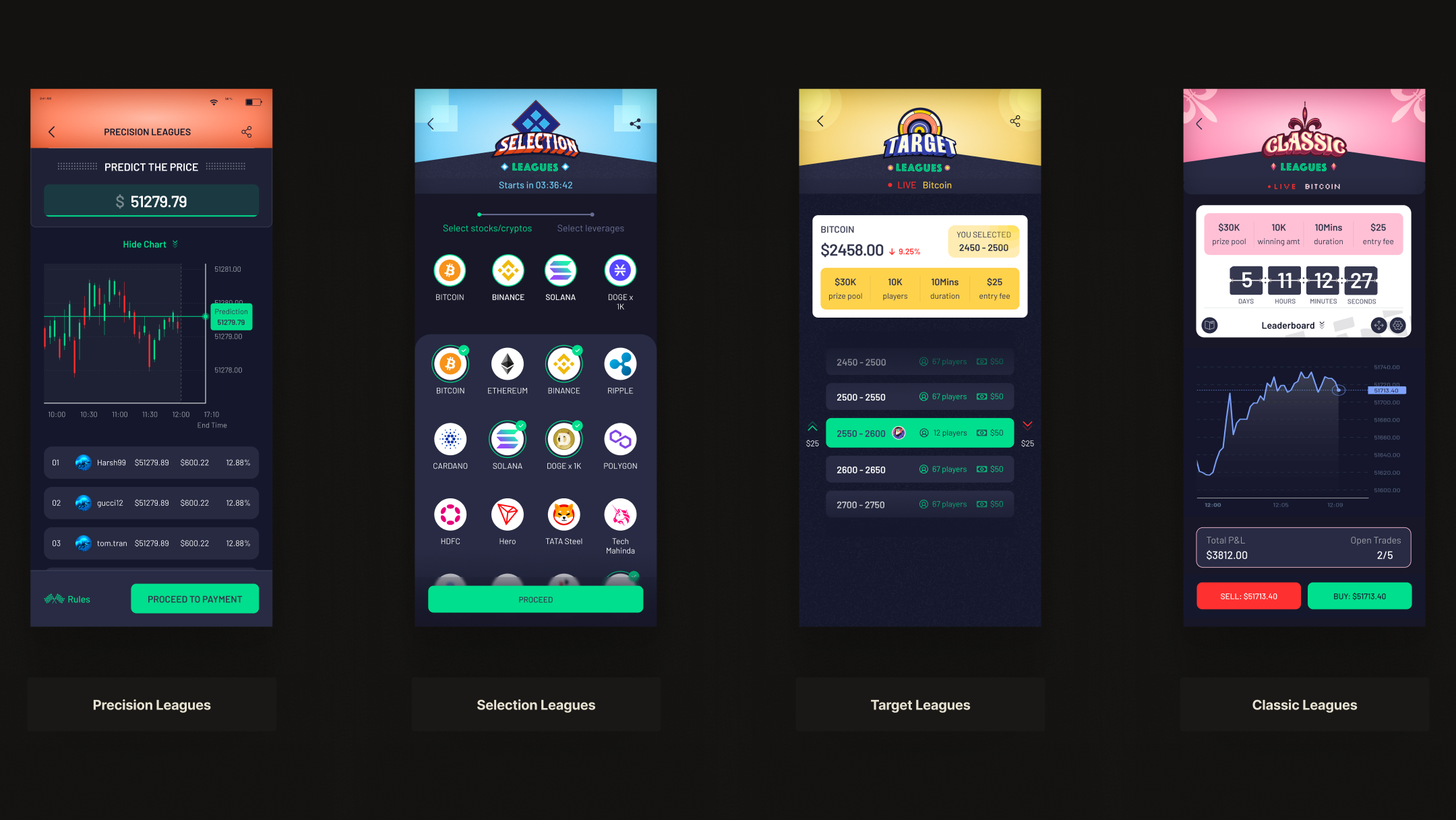
V1 shipped in July 2022. The product grew: real users, real leagues, real money on the line. The foundation held.
“The discontinuation was a strategic product decision, not a design failure. The system survived contact with the market. The business model didn't survive the regulatory environment.”
What ended TradingLeagues wasn't a product problem. In 2023, India's 28% GST ruling on real-money gaming fundamentally changed the unit economics. The team's response was to pivot toward a global platform, which required integrating crypto wallets and rebuilding the onboarding experience for an international user base. For a product with a primarily India-first user base, that transition added friction the growth couldn't absorb. The product was sunset as a strategic response to a regulatory shift.
The hardest part wasn't defining the league formats. It was making the reasoning behind each decision legible to a team I wouldn't be working alongside. When you're on the same team, you can fill gaps in a Figma with a Slack message. When you're handing off to someone else entirely, the Figma has to speak for itself.
That constraint forced a discipline I've carried forward: the decision isn't done when the screen is done. It's done when someone who wasn't in the room can understand why the screen looks the way it does and what would break if it changed.
The broader lesson: clarity is a design output, not just a design process. An MVP that gives a team shared understanding is as valuable as a prototype that tests an assumption, sometimes more.
What I'd do differently: validate the league mechanics with users earlier, before the IA was fully locked. Testing one or two formats with actual users before finalising the handoff would have surfaced usability gaps that only appeared later in V1.